UPDATE REGARDING MICHELLE TROCONIS' HABEAS PROCEEDINGS
- 4 days ago
- 5 min read
Updated: 3 days ago
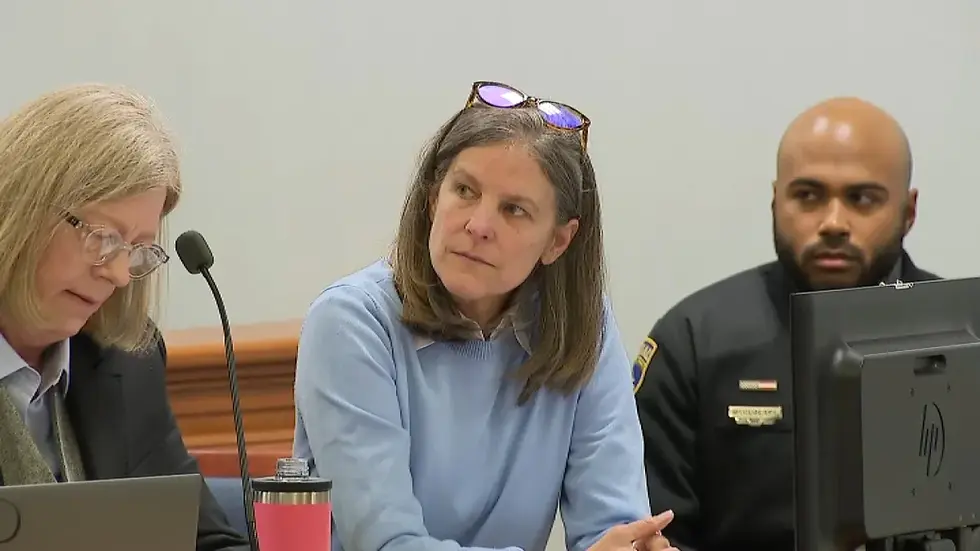
“Lindy Urso, the attorney for Pawel Gumienny, Dulos’ former project manager who testified against Troconis in her trial, also spoke with investigators back in 2019, but he had an immunity deal on the table. Urso said he would not have let his client sit for such interviews without that deal. “Never,” he said. “Never, because she had nothing to gain, she had nothing to gain going in there. And she had everything to lose, as we see today,” Urso said just after her conviction.” -- Hartford Courant: ‘Attorneys agree: Michelle Troconis ‘had everything to lose’ in interviews with CT investigators’ (March 2019)
We are writing to share an important update regarding Michelle’ continuing efforts to challenge the denial of her petition for a writ of habeas corpus.
On June 4, 2026, the court granted Michelle's Petition for Certification to Appeal, allowing her to seek review by the Connecticut Appellate Court of the May 18, 2026 decision denying habeas relief. The certification preserves Michelle's right to pursue appellate review of significant constitutional issues concerning the effectiveness of counsel during the three police interviews conducted in 2019. Although certification does not determine the merits of those claims, it allows the issues raised in Michelle's petition to receive further judicial review.
In addition, on June 8, 2026, Attorney Michael Brown filed a Motion to Reargue asking the habeas court to reconsider several aspects of Judge Carl Schuman's memorandum of decision. The motion does not merely disagree with the outcome reached by the court. Rather, it argues that several key conclusions contained in the memorandum were based on an incorrect application of the constitutional standards governing effective assistance of counsel:
JUDGE’S CONCLUSION: Bowman acted as Michelle's advocate throughout the interviews.
CHALLENGE: The Motion to Reargue states that the first interview does not demonstrate Bowman advocating for Michelle's position—that she was innocent, that she did not believe Fotis Dulos had any reason to harm Jennifer Dulos, and that she believed Jennifer had run away and was still alive and in hiding. Those beliefs formed the foundation of Michelle's understanding of events in June 2019. Yet the filing argues that the interview record does not reflect counsel affirmatively protecting, emphasizing, or advancing those positions during questioning.
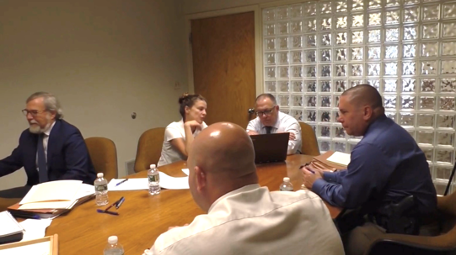
Bowman turning his back to chat with the lead prosecutor for several minutes while investigators and detectives grill Michelle about the location of Jennifer Dulos
The motion therefore contends that once Michelle agreed to speak with law enforcement, counsel had an obligation not merely to be present, but to actively advocate for her position and safeguard her interests throughout the interview process.
JUDGE’S CONCLUSION: Andrew Bowman pursued a strong strategy that deserved deference.
CHALLENGE: The Motion argues that an attorney cannot formulate a sound strategy without first understanding the facts and risks confronting the client. Bowman had not reviewed the arrest warrant, had not reviewed key video evidence, and lacked specific knowledge regarding the evidence the State claimed to possess when he advised Michelle to speak with police. The motion argues that strategic decisions are entitled to deference only when they are informed and objectively reasonable.
JUDGE’S CONCLUSION: Bowman's decisions were reasonable based upon his experience and his belief that cooperation might lead to Michelle being treated as a witness rather than a suspect.
CHALLENGE: The Motion to Reargue contends that the court improperly focused on Bowman's subjective beliefs rather than applying the objective standard required by Strickland v. Washington. The proper question is not whether Bowman sincerely believed his approach would benefit Michelle, but whether a reasonably competent attorney, possessing the information available at the time, would have acted similarly.
The motion further argues that Bowman relied largely on trust in Prosecutor Richard Colangelo without independently verifying the State's evidence or obtaining protections for Michelle before subjecting her to repeated interviews.
JUDGE’S CONCLUSION: Bowman's trust in the prosecutor and expectation that cooperation might result in favorable treatment supported the reasonableness of his strategy.
CHALLENGE: The Motion to Reargue challenges that conclusion by arguing that Bowman never secured immunity, a proffer agreement, or other protections for Michelle. According to the motion, the memorandum gave undue weight to Bowman's trust in the prosecutor and failed to examine whether reliance without safeguards was itself objectively reasonable.
JUDGE’S CONCLUSION: The death of Fotis Dulos was unforeseeable and therefore could not have been anticipated by Bowman.
CHALLENGE: The Motion argues that the memorandum framed foreseeability too narrowly. The relevant issue is not whether Bowman should have foreseen Fotis Dulos' death, but whether repeated, unprotected cooperation created foreseeable risks generally. Those risks included the possibility that the State could change course, that Michelle's statements could later be used against her, and that she could ultimately face prosecution despite her cooperation.
JUDGE’S CONCLUSION: Andrew Bowman's performance fell within the wide range of reasonable professional assistance required by the constitution.
The Motion to Reargue asks the court to reconsider that conclusion, arguing that the memorandum relied on hindsight, focused heavily on Bowman's subjective explanations, and gave insufficient consideration to what Bowman actually knew and what a reasonably competent attorney would have done under the circumstances.
Taken together, the Motion to Reargue challenges several of the central premises underlying the May 18, 2026 memorandum of decision and asks the court to reconsider whether the proper constitutional standard under Strickland v. Washington was applied.
For Michelle and her family, these developments represent another important step in the continued effort to obtain full judicial review of the issues raised in her habeas petition.
We remain deeply grateful to everyone who continues to support Michelle, pray for her and her family, and follow the facts of this case with an open mind. We will continue to provide updates as the legal process moves forward. Many members of the legal community agree with the assertions on Brown’s motion:
Conclusion in Memorandum | How the Motion Challenges it |
Bowman had a strong strategy | He lacked sufficient information to formulate one, and the strategy itself lacked protections |
Strategy deserved deference | Deference applies only to objectively reasonable strategies |
Bowman's trust in Colangelo was reasonable | Subjective trust cannot substitute for investigation and safeguards |
Fotis Dulos' death was unforeseeable | The court framed foreseeability too narrowly and ignored other foreseeable risks |
Bowman acted as an advocate throughout the interviews | The first interview does not show him advocating Michelle's position that she was innocent, believed Jennifer was alive, and believed Fotis had no reason to harm her |
For those who wish to review the legal filing directly, we have attached Attorney Michael Brown’s Motion to Reargue, filed on June 8, 2026, and the Petition for Certificate to Appeal, filed on June 4, 2026.


Comments